Dr. D.Y. Patil College of Engineering & Innovation

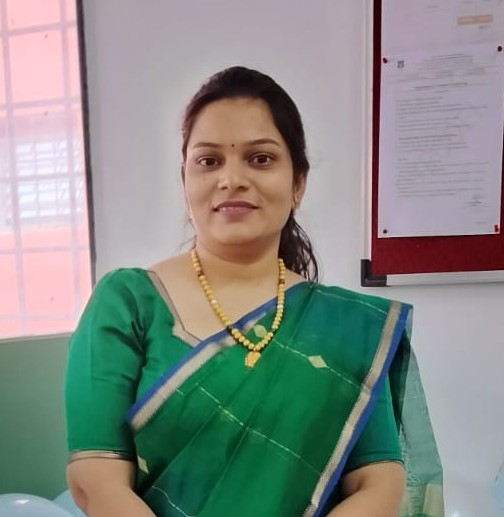
Prof. Ms. Aradhana
Pawar

Assistant Professor  ·  Department of Computer Engineering

M.E. Computer Engineering  |  SPPU Affiliated  |  AICTE Approved

Internet of Things and Cyber Security

0Years
Experience
0Core
Subjects
0Students
Guided
0Research
Topics
Prof. Aradhana Pawar
AP
Prof. Aradhana Pawar
Computer Engineering
DBMSTOCME
DY Patil College · Pune
Scroll to explore
01 — About

Academic
Profile

Prof. Ms. Aradhana Pawar is a dedicated Assistant Professor in the Department of Computer Engineering at Dr. D.Y. Patil College of Engineering and Innovation, Varale Talegaon, Pune — one of the progressive AICTE-approved institutions affiliated with Savitribai Phule Pune University (SPPU).

Holding a Master's degree in Computer Engineering, she brings strong theoretical foundations and practical insights to her teaching. She is committed to fostering analytical thinking and problem-solving skills among her students through structured pedagogy and real-world applications.

Her pedagogical approach integrates conceptual clarity with application-level understanding, ensuring that students not only excel in examinations but develop the competencies required in the technology industry. She actively participates in student mentoring, academic counselling, and project supervision.

"
Education is not the filling of a pail, but the lighting of a fire — and every student deserves that spark.
Faculty Details
Full Name Prof. Ms. Aradhana Pawar
Designation Assistant Professor
Department Computer Engineering
Qualification M.E. (Computer Engineering)
University Savitribai Phule Pune University (SPPU)
Experience 1–4 Years (Teaching)
Email
College Dr. D.Y. Patil College of Engineering & Innovation
Location Varale, Talegaon Dabhade, Pune, MH
HOD Dr. Alpana Adsul
Areas of Expertise
Database Management Theory of Computation Formal Languages SQL & Query Optimization Automata Theory Relational Algebra Transaction Processing Computer Science Theory
02 — Education

Academic
Credentials

Master of Engineering (M.E.)
Computer Engineering
Postgraduate·Savitribai Phule Pune University

Advanced studies in computer engineering with focus on algorithms, database systems, theoretical computer science, and software engineering principles.

Advanced AlgorithmsDatabase ArchitectureSoftware DesignResearch Methodology
Bachelor of Engineering (B.E.)
Computer Engineering
Undergraduate·Savitribai Phule Pune University

Foundational engineering education covering programming, data structures, operating systems, computer networks, and core computer science principles.

ProgrammingData StructuresOS & NetworksDigital Systems
Higher Secondary Certificate (HSC)
Science Stream (PCM + Computer Science)
Secondary·Maharashtra State Board

Completed higher secondary with science stream, building a strong foundation in Mathematics, Physics, and Computer Science.

MathematicsPhysicsComputer Science
Approved By & Affiliated To
A
AICTE
All India Council for Technical Education
S
SPPU
Savitribai Phule Pune University
D
DY Patil
DY Patil Education Foundation
03 — Teaching

Teaching
Philosophy & Approach

01

Concept-First Pedagogy

Building strong theoretical foundations before moving to application. Every concept is introduced with real-world context so students understand the "why" behind the "what."

02

Practice-Driven Labs

Complementing lectures with hands-on laboratory sessions where students implement, experiment, and validate theoretical knowledge through real database queries and automata exercises.

03

Structured Mentorship

Guiding students beyond the classroom through project supervision, audit course oversight, and academic counselling ensuring holistic academic growth.

04

Outcome-Based Education

Aligning course content and assessments with defined learning outcomes, ensuring students meet programme educational objectives (PEOs) and course outcomes (COs) under SPPU.

05

Collaborative Learning

Encouraging peer-to-peer discussion, group problem solving, and team-based project presentations, preparing students for collaborative professional environments.

06

Continuous Assessment

Using unit tests, viva examinations, lab assessments, and internal marks in a structured way that provides continuous feedback and helps identify learning gaps early.

Typical Class Structure
20%
Previous Recap
45%
New Concept Delivery
25%
Worked Examples
10%
Q & A
04 — Subjects

Courses
Taught

CSE-301

Database Management Systems

Core Subject · Second Year Computer Engineering · SPPU
DBMS

A comprehensive course covering the complete lifecycle of database systems — from conceptual design using ER models through relational algebra, SQL, normalization, and transaction management.

Course Modules
M1
Introduction to Databases
Database concepts, DBMS architecture, ER modelling, entity sets, relationships, keys, ER diagrams, EER diagrams
M2
Relational Model & Algebra
Relational model, tuples, domains, relational algebra operations — select, project, join, union, intersection, division
M3
Structured Query Language
DDL, DML, DCL, TCL commands, joins, subqueries, views, triggers, stored procedures, indexing
M4
Normalization
Functional dependencies, 1NF, 2NF, 3NF, BCNF, 4NF, 5NF, decomposition, lossless joins, dependency preservation
M5
Transaction Management
ACID properties, concurrency control, locking protocols, deadlock handling, serializability, recovery techniques
M6
Query Processing & Optimization
Query execution plans, cost estimation, heuristics-based optimization, physical database design, B+ trees, hash indexing
Course Outcomes
CO1 Design ER diagrams for real-world systems
CO2 Write and optimize SQL queries
CO3 Apply normalization to remove redundancy
CO4 Analyze transaction concurrency issues
CO5 Implement database recovery strategies
Tools & Technologies
MySQLOracle SQLPostgreSQLSQL*PlusER StudiophpMyAdmin
CSE-302

Theory of Computer Science

Core Subject · Second Year Computer Engineering · SPPU
TOC

A rigorous theoretical course forming the mathematical backbone of computer science. Students explore formal models of computation, language theory, and the fundamental limits of algorithmic solvability.

Course Modules
M1
Finite Automata
DFA, NFA, ε-NFA, subset construction, equivalence, minimization of DFA, Myhill-Nerode theorem
M2
Regular Languages
Regular expressions, Kleene's theorem, pumping lemma for regular languages, closure properties, decision algorithms
M3
Context-Free Languages
CFGs, derivation trees, ambiguity, CNF, GNF, PDAs, CYK algorithm, pumping lemma for CFLs
M4
Turing Machines
Standard TM, variants, multi-tape TM, non-deterministic TM, Church-Turing thesis, universal TM
M5
Decidability
Decidable languages, halting problem, Rice's theorem, reductions, undecidable problems, Post correspondence problem
M6
Complexity Theory
P vs NP, NP-complete, NP-hard problems, polynomial reductions, Cook-Levin theorem, approximation
Course Outcomes
CO1 Construct DFA/NFA for given languages
CO2 Design CFGs and PDAs
CO3 Construct Turing Machines for problems
CO4 Prove language decidability / undecidability
CO5 Classify problems by computational complexity
Lab Experiments
DFA SimulationNFA to DFACFG ParsingTM SimulatorJFLAP ToolPython Automata
Additional Teaching Sessions
Database Lab
SQL, PL/SQL, triggers, stored procedures on MySQL/Oracle
TOC Lab / Tutorials
Automata construction, grammar proofs, JFLAP exercises
Programming Fundamentals
C/C++ foundations, algorithmic thinking, pseudocode
Computer Science Basics
Binary systems, logic gates, problem-solving techniques
05 — Responsibilities

Academic
Roles & Duties

Teaching & Instruction

  • Delivering theory lectures for core Computer Engineering subjects
  • Conducting laboratory practical sessions aligned with course syllabi
  • Preparing and executing tutorial sessions for problem solving
  • Developing lesson plans and teaching notes per SPPU curriculum
  • Preparing question banks, assignments and internal examination papers
  • Evaluating answer sheets, lab journals, and project reports

Academic Administration

  • Maintaining attendance records and academic registers
  • Conducting and recording internal assessment marks (IA1, IA2)
  • Coordinating with SPPU regarding curriculum and examinations
  • Participation in departmental meetings and academic planning
  • Contributing to NAAC/NBA accreditation documentation
  • Implementing outcome-based education (OBE) frameworks

Student Mentorship

  • Acting as project guide for student mini and major projects
  • Supervising audit course presentations and reports
  • Providing individual academic counselling and guidance
  • Monitoring student academic progress and performance
  • Encouraging participation in seminars, workshops and hackathons
  • Preparing students for university practical examinations

Professional Development

  • Attending Faculty Development Programmes (FDPs) and workshops
  • Updating course content with emerging industry practices
  • Participation in academic conferences and seminars
  • Collaborative research with senior faculty members
  • Contributing to departmental technical events and competitions
  • Self-learning new tools and technologies for better instruction
06 — Mentorship

Student
Mentorship & Guidance

Documented Achievement · Academic Year 2024–2025
Guide — Audit Course: Social Awareness & Governance
Second Year Computer Engineering · SPPU Curriculum
"The audit course presentation was carried out under the supervision of Ms. Aradhana Pawar."— Official Course Report Certificate, 2024–25

As the assigned guide for this audit course, Prof. Pawar supervised the full academic presentation process — from topic selection and research guidance through report preparation and final presentation delivery.

Mentorship Process
01
Topic Allocation
Assigning relevant research topics aligned with course objectives and student interests
02
Research Guidance
Weekly progress reviews, literature guidance, and research methodology support
03
Report Review
Detailed feedback on report structure, content accuracy, and academic writing standards
04
Presentation Coaching
Helping students deliver confident, well-structured academic presentations
Mentorship Impact Areas
Academic Presentation Skills
Report Writing Quality
Subject Conceptual Clarity
Research Aptitude
Student Confidence
Students Mentored
0
Per Batch
0
Batches (Approx.)
SE (Second Year) — Audit Course Guide
TE / BE — Subject Mentoring
Mini Projects — Technical Supervision
07 — Certificates

Academic
Certifications & Awards

A curated record of professional certifications, faculty development programmes, workshops, and academic recognition. Click any card to view the certificate.

Verified
Click to View
IBM
Introduction to Big Data with Spark and Hadoop
IBM · Coursera
Official
Click to View
Participation
DBMS Participation Certificate
DY Patil College · Computer Dept.
Awarded
Click to View
Workshop
IoT Participation Certificate
Dr. D.Y. Patil College of Engg. & Innovation
Recognition
Click to View
Event
Marathi Day Workshop Certificate
Dr. D.Y. Patil College of Engg. & Innovation
4+
Certificates
2
Workshops
1
IBM Course
Prof. Pawar actively participates in faculty development programmes, workshops, and professional certification courses to stay current with emerging technologies and pedagogical best practices.
08 — Department

Computer Engineering
Department

The Department of Computer Engineering at Dr. D.Y. Patil College of Engineering and Innovation is a dynamic academic unit offering a full undergraduate B.E. Computer Engineering programme under the SPPU framework. The department is led by Dr. Alpana Adsul and comprises a team of dedicated faculty working across diverse specializations in modern computer science and engineering.

AA
Dr. Alpana Adsul
Head of Department — Computer Engineering
Dr. D.Y. Patil College of Engineering & Innovation
Department Research & Teaching Areas
Artificial Intelligence & ML
Data Science & Analytics
Cloud Computing
Blockchain Technology
Internet of Things (IoT)
Database Systems
Computer Networks
Data Structures & Algorithms
Cyber Security
Operating Systems
Software Engineering
Student Curriculum Snapshot — B.E. Computer Engineering (SPPU)
First Year
Engineering MathematicsEngineering Physics/ChemistryBasic Programming (C)Engineering Graphics
Second Year
Database Management Systems ★Theory of Computation ★Data StructuresComputer OrganizationDiscrete Mathematics
Third Year
Operating SystemsComputer NetworksSoftware EngineeringDesign & Analysis of Algorithms
Final Year
AI & Machine LearningCloud ComputingMajor ProjectElectives
★ Subjects taught by Prof. Aradhana Pawar
09 — Institution

Dr. D.Y. Patil College of
Engineering & Innovation

Dr. D.Y. Patil College of Engineering and Innovation (DYPCEI) is a progressive, AICTE-approved technical institution established in 2014, affiliated with Savitribai Phule Pune University. Situated at Varale, Talegaon Dabhade in the Pune district of Maharashtra, the college provides quality technical education with an emphasis on innovation, research, and industry readiness.

The college operates across a compact but well-equipped 3.5-acre campus, offering undergraduate programmes in various engineering disciplines. The institution upholds the D.Y. Patil group's legacy of academic excellence, practical orientation, and student-centric education.

2014
Year Established
AICTE
Approved By
SPPU
Affiliated To
3.5 Ac
Campus Area
Location & Address
College: Dr. D.Y. Patil College of Engineering and Innovation
Village: Varale
Taluka: Talegaon Dabhade
District: Pune
State: Maharashtra, India
PIN: 410507
View on Google Maps ↗
Engineering Programmes Offered
Computer Engineering
Mechanical Engineering
Civil Engineering
Electronics & Telecommunication
Information Technology
10 — Contact

Get in
Touch

Official Email
Click to copy
Department
Computer Engineering
Dr. D.Y. Patil College of Engineering & Innovation
Office Location
Varale, Talegaon Dabhade, Pune
Maharashtra — 410507
Office Hours
Monday – Saturday
09:00 AM – 05:00 PM (IST)
Send a Message
Message sent successfully! Prof. Pawar will get back to you.